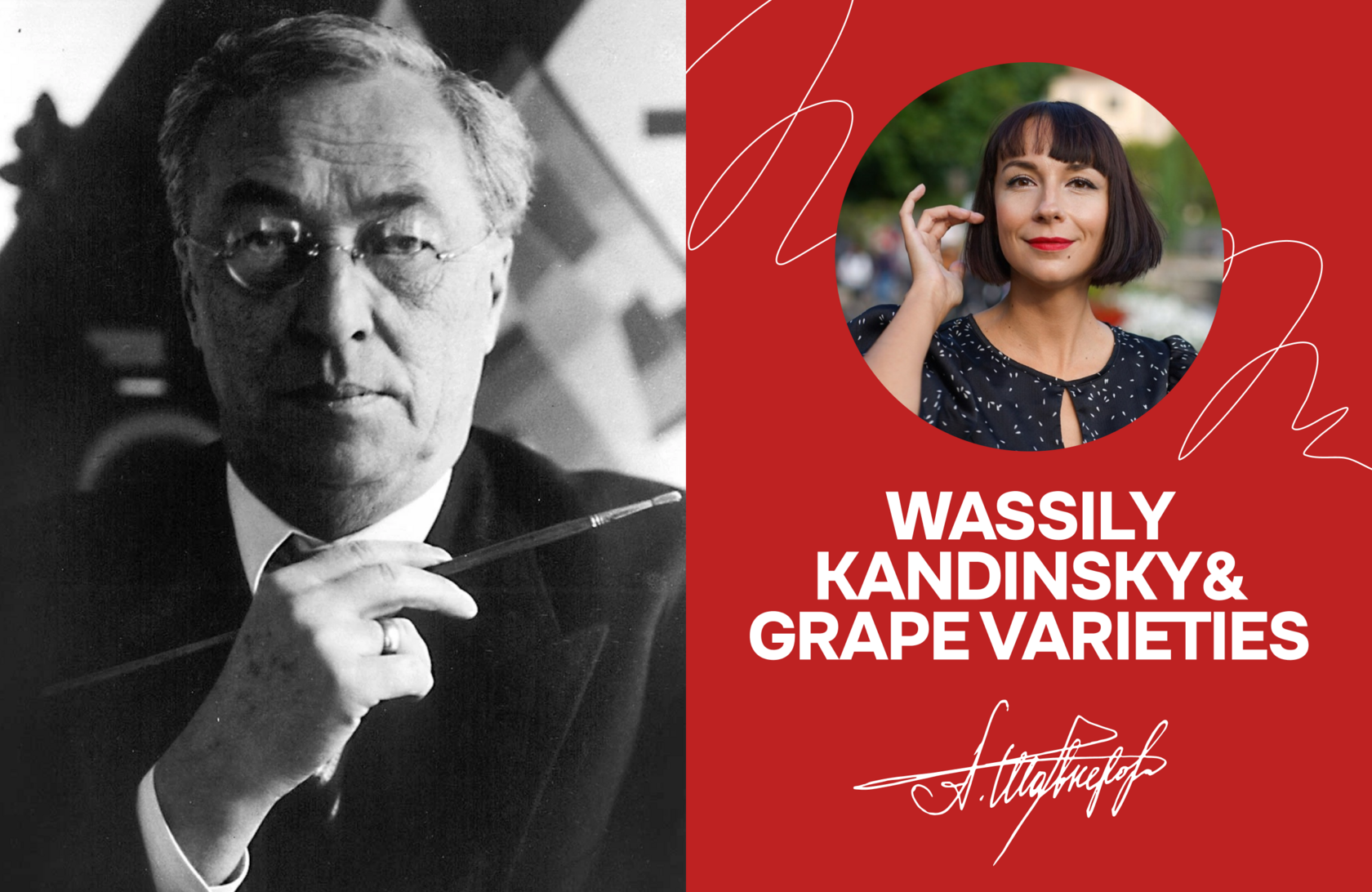
This weekend, I visited La Citadelle de Blaye (Bordeaux region, France), a renowned fortress that served as an arsenal and barracks to protect the city from external attacks and internal uprisings in the largest river estuary in Europe.
Imagine my surprise when I discovered an exhibition of Wassily Kandinsky’s paintings at the entrance.
The strong connection between Slavic and French cultures never ceases to amaze me.
As a person with a passion for art and wine, I immediately began to look for connections between wine varieties and Kandinsky’s masterpieces. I listened to the feelings and sensations that arise in my memory based on the tasting experience when I look at these masterpieces.
Kandinsky, as one of the pioneers of abstract art, created works full of emotions, colors, and dynamics. Similarly, each grape variety brings its unique characteristics to wine, creating unique flavor and aromatic compositions.
I did not indicate appellations and names of wine brands to allow you to find personal examples, perhaps inspired by my tips
I would be delighted if you join the discussion or even debate the pairs I have chosen.
Imagine my surprise when I discovered an exhibition of Wassily Kandinsky’s paintings at the entrance.
The strong connection between Slavic and French cultures never ceases to amaze me.
As a person with a passion for art and wine, I immediately began to look for connections between wine varieties and Kandinsky’s masterpieces. I listened to the feelings and sensations that arise in my memory based on the tasting experience when I look at these masterpieces.
Kandinsky, as one of the pioneers of abstract art, created works full of emotions, colors, and dynamics. Similarly, each grape variety brings its unique characteristics to wine, creating unique flavor and aromatic compositions.
I did not indicate appellations and names of wine brands to allow you to find personal examples, perhaps inspired by my tips
I would be delighted if you join the discussion or even debate the pairs I have chosen.
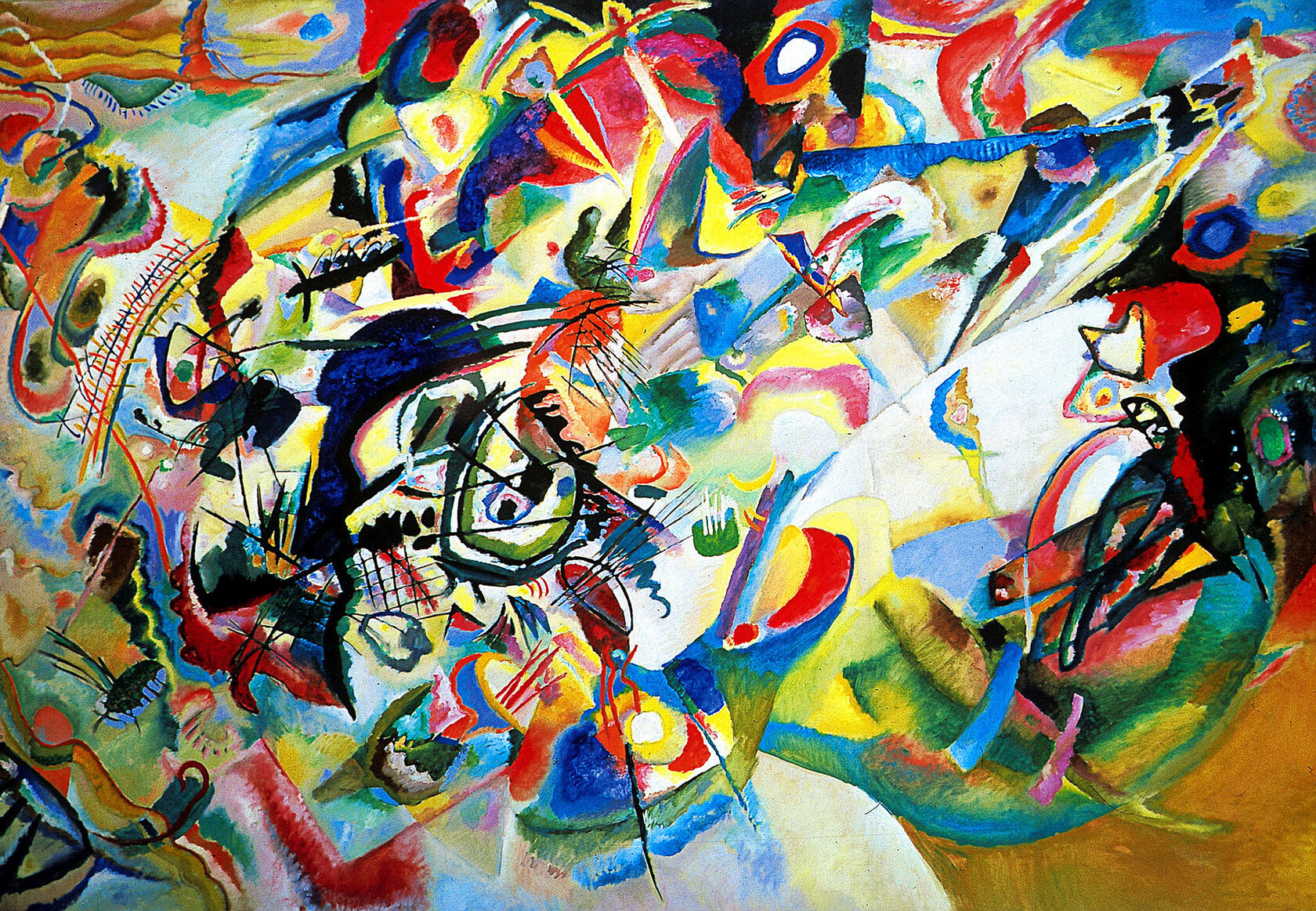
1. Kandinsky: "Composition VII" (1913)
Wine: Cabernet Sauvignon (France)
"Composition VII" is one of Kandinsky's most complex and multi-layered works. The painting is full of swirling colors and shapes, creating an impression of chaotic yet harmonious movement.
Cabernet Sauvignon from France has a complex structure and rich flavor, combining notes of blackcurrant, cherry, and sometimes tobacco or green pepper. Like the painting, this wine is powerful, with multi-layered aromas and flavors.
Cabernet Sauvignon from France has a complex structure and rich flavor, combining notes of blackcurrant, cherry, and sometimes tobacco or green pepper. Like the painting, this wine is powerful, with multi-layered aromas and flavors.
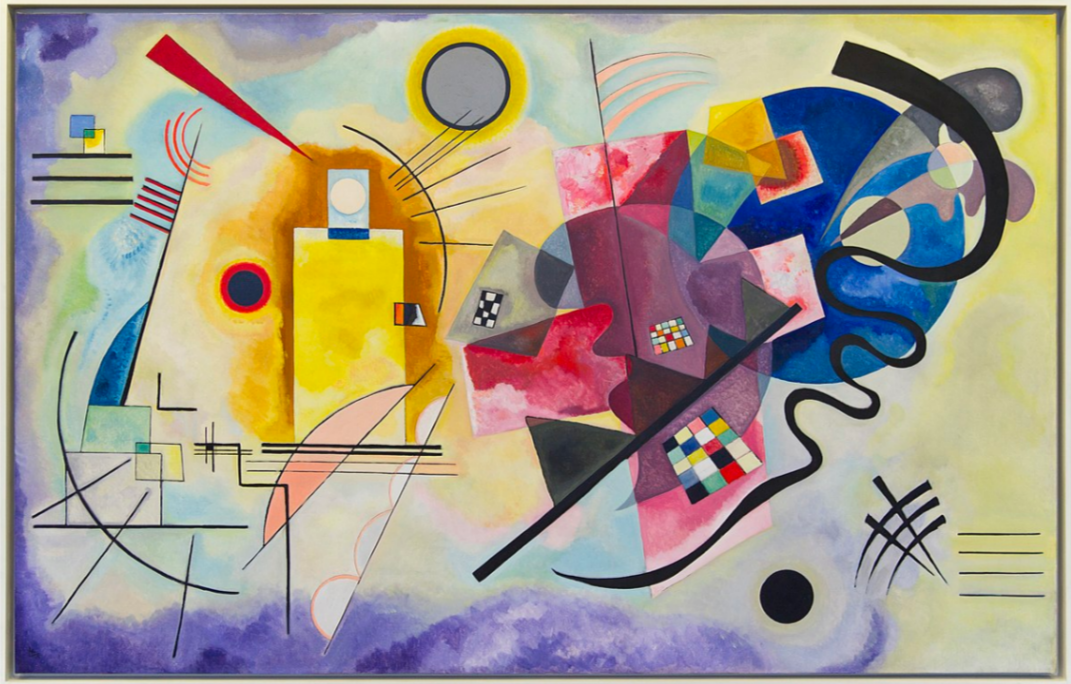
2. Kandinsky: "Yellow-Red-Blue" (1925)
Wine: Chardonnay (France)
"Yellow-Red-Blue" is an exploration of primary colors and their interactions. Kandinsky uses geometric shapes and bright colors to create a pure and expressive composition.
Chardonnay from France can be both light and fresh or rich and buttery, depending on the terroir and winemaking. This wine, like the painting, has a wide palette of taste characteristics, from green apple and citrus to vanilla and nuts.
Chardonnay from France can be both light and fresh or rich and buttery, depending on the terroir and winemaking. This wine, like the painting, has a wide palette of taste characteristics, from green apple and citrus to vanilla and nuts.
3. Kandinsky: "Improvisation 31 (Sea Battle)" (1913)
Wine: Syrah (Australia)
"Improvisation 31" depicts a dynamic and emotional scene of battle, where color and shape interact in a bright, almost aggressive dance.
Syrah from Australia is known for its intense aromas of blackberries, black pepper, and meat. This powerful and rich wine, like the painting, has depth and intensity, evoking strong emotions.
Syrah from Australia is known for its intense aromas of blackberries, black pepper, and meat. This powerful and rich wine, like the painting, has depth and intensity, evoking strong emotions.
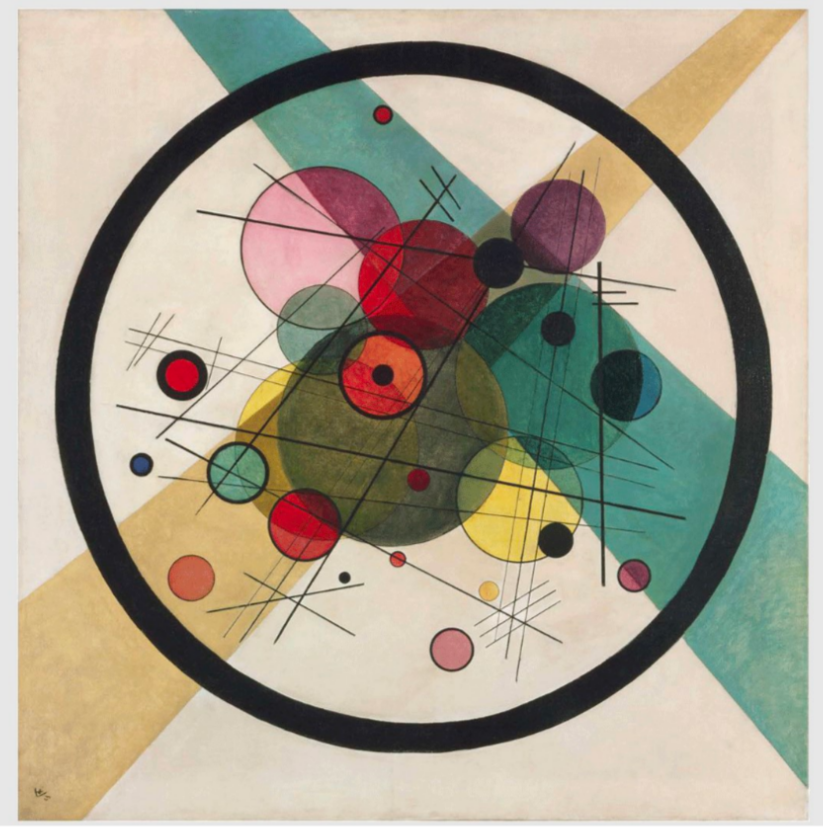
4. Kandinsky: "Circles in a Circle" (1923)
Wine: Riesling (Germany)
"Circles in a Circle" is a harmonious composition of circles within a larger circle, symbolizing unity and wholeness.
Riesling from Germany is often characterized by its freshness, acidity, and aromas of citrus, apples, and mineral notes. This wine, like the painting, has elegance and purity, with a perfect balance.
Riesling from Germany is often characterized by its freshness, acidity, and aromas of citrus, apples, and mineral notes. This wine, like the painting, has elegance and purity, with a perfect balance.
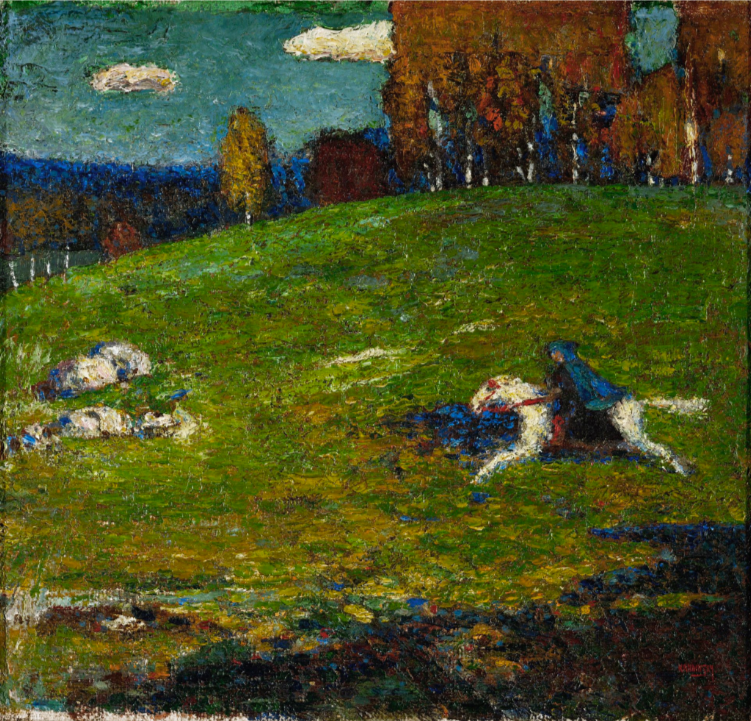
5. Kandinsky: "The Blue Rider" (1903)
Wine: Pinot Noir (USA)
"The Blue Rider" is one of Kandinsky's early works, depicting a rider rushing through an abstract landscape. The painting is full of movement and expression, with deep blue and green tones.
Pinot Noir from the USA is a refined and elegant wine with aromas of cherry, raspberry, and sometimes earthy or mushroom notes. Like the painting, Pinot Noir has subtlety and nuances, creating a deep and expressive impression.
These examples show how Kandinsky's works and grape varieties can be compared through their unique characteristics, creating new levels of understanding and enjoyment of art and wine.
Pinot Noir from the USA is a refined and elegant wine with aromas of cherry, raspberry, and sometimes earthy or mushroom notes. Like the painting, Pinot Noir has subtlety and nuances, creating a deep and expressive impression.
These examples show how Kandinsky's works and grape varieties can be compared through their unique characteristics, creating new levels of understanding and enjoyment of art and wine.